Hope Without Illusion
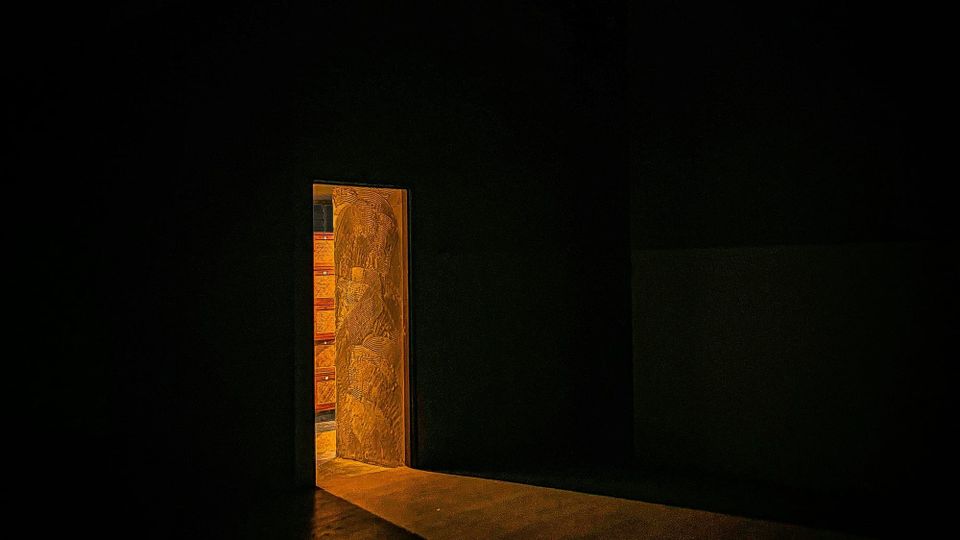
There is a particular kind of exhaustion that follows an ending that didn't resolve cleanly.
It isn't despair, exactly. Despair has a clarity to it, a definite closing of doors. What comes after an unresolved ending is harder to see and harder to name. The doors are still open, but no one is sure which ones lead anywhere worth going. The work continues. The questions remain. And the community carries forward something it has not yet fully processed, into a future it cannot yet see. In that space, the reflex toward optimism is almost irresistible.
Optimism offers relief. It says: things will improve, the right leader will come, the next chapter will be better than the last. It borrows confidence from the future and spends it in the present, before the future has agreed to anything. In small doses, optimism can be useful. It sustains motion when motion is needed. But optimism is not hope. And in communities navigating serious transition, the difference matters.
Optimism is contingent. It depends on circumstances improving. When they don’t…well, things often don’t. When the new leader disappoints, when the strategic plan stalls, when the hoped-for renewal turns out to be slower or messier than anyone expected, optimism collapses. It has nothing to stand on once the evidence turns against it.
There is also something quietly coercive about optimism in community life. Leaders who lean on it heavily, even from genuine care, can create pressure for people to perform hopefulness they don't actually feel. The community learns to mirror back whatever the leader projects. What looks like shared confidence is often, underneath, a kind of managed appearance, people being careful not to be the one who sounds defeated. That appearance holds until it doesn't, and when it breaks, the disillusionment is sharper for having been suppressed.
Hope is different. Not because it is more confident, but because it is not waiting for the evidence to come in before it takes a posture toward the future. This is what it means to speak of hope as a discipline rather than a feeling.
A feeling arrives, unbidden and often unexpected. A discipline is cultivated. And the difference between communities that are able to move faithfully through transition and those that are not often has less to do with circumstances than with whether hope has been practiced long enough to become a kind of orientation. It is a way of inhabiting the present that remains open to the future without requiring the future to perform on demand. That practice is not easy to describe, because it does not announce itself.
It shows up in the way a community returns to its core questions rather than abandoning them when the answers feel far away. It shows up in the willingness to keep making small, concrete commitments, even when the larger picture is still unclear. It shows up in communities that can say, honestly, we don't know what comes next, without that honesty becoming an excuse for paralysis.
It also shows up in the quality of attention a community is able to sustain. Communities that have practiced hope tend to remain curious rather than defensive. They ask questions about what is happening rather than rushing to assign blame for it. They can hold difficulty and possibility at the same time, not because they are unusually resilient, but because they have been trained, by repeated experience, to resist the pull toward either despair or false certainty. That training doesn't make the difficulty smaller. It makes the community larger than the difficulty.
None of that is optimism. Optimism would insist on knowing. Hope is willing to proceed without knowing, because its orientation is not primarily toward a particular outcome but toward the possibility that something real and good can still emerge from what has happened. This is also where illusion becomes dangerous.
The illusion hope must be protected from is not pessimism. It is the belief that hoping means predetermining what the future should look like, and then measuring everything against that predetermined picture. When communities do this, hope becomes a trap. It sets up expectations that the future is almost certain to disappoint. And when disappointment comes, what collapses is not just a plan, it is the community's capacity to remain open at all.
This is a subtler problem than it first appears. Communities in transition are often encouraged to cast a vision, to name what they're moving toward, to articulate a preferred future. That work has its place. But when the preferred future hardens into a fixed destination—when hope becomes inseparable from a particular outcome—the community has stopped practicing hope and started practicing a kind of anticipatory certainty. The future is expected to confirm what the community has already decided. When it doesn't, the failure feels total, because what was lost was not just an outcome but the very framework that gave the community permission to hope at all.
Hope without illusion holds the future loosely. It does not pretend that loss didn't happen, or that what was grieved will be easily replaced. It does not fast-forward past the difficulty in order to arrive at the good part. It simply refuses to let the difficulty be the last word.
That refusal is a choice. Made not once, but repeatedly. In small moments and in large ones. By leaders who model it, and by communities that learn, over time, to make it together. This is why hope is not primarily a feeling about the future. It is a practice in the present, a trained attentiveness to what is still possible, even inside what is unfinished.
Communities that cultivate this posture develop something rare. They become capable of holding open questions without needing to close them prematurely. They can acknowledge what was lost without being defined by it. They can invest in futures they cannot guarantee, because their confidence is not located in the outcome but in the practice itself.
That confidence is not certainty. It never pretends to be. But it is sturdier than optimism. It does not depend on things going well in order to remain intact. It has been tested by what didn't resolve, what didn't improve, what didn't come back, and it has chosen, in full awareness of all that, to remain open.
That is what hope without illusion looks like. Not a feeling that arrives when the news gets better. A practice that holds when it doesn't.
More will emerge.
For now, this is enough.